Skip to content
Abstract architecture of interlocking cryptographic proof structures — the visual language of zero-knowledge databases.

Zero-Knowledge Data Infrastructure

Prove every query.Reveal no data.

zkDB designs and delivers zero-knowledge database systems for the regulated enterprise. We compute on private data and cryptographically prove the answer — without exposing a single record.

In scope·Basel III·capital adequacy, proven without disclosing a single position
/ 01
2015–present

A decade of peer-reviewed research on verifiable databases

Zero-knowledge SQL · PLONKish · Halo2 · KZG & IPA

/ 02
4

Regulated sectors the practice is built for

Finance · Healthcare · Government · Cloud

/ 03
12+

Compliance regimes our architectures are designed against

Basel III · MiFID II · HIPAA · GDPR · EU AI Act · CSRD

/ 04
Bespoke

Every system architected to a single institution

By introduction · under NDA

The Mechanism

A query, a proof, a verification.

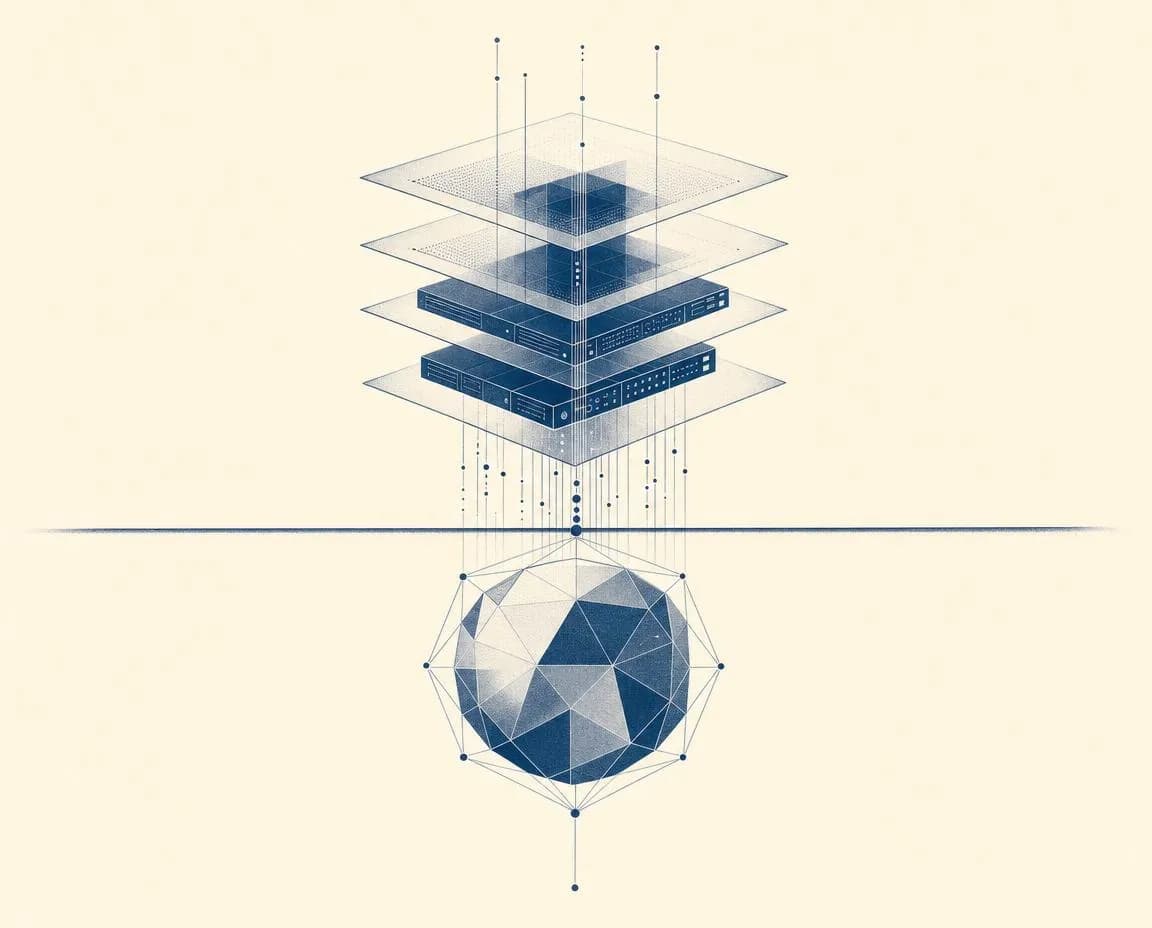
The diagram alongside traces a single guarantee: a query is agreed in the open, the prover computes the answer over data only it can see, and a verifier accepts the result from the proof alone — without ever touching the underlying rows.

  • The prover sees the rows; everyone else sees the proof.
  • The verifier needs only the verification key, the proof, and the active commitment.
  • The artifact is non-interactive and transferable — re-verifiable indefinitely, by anyone, offline.

Illustrative queries · The mechanism, not a benchmark

01 · The Problem

The data trust paradox.

A central bank asks a commercial bank to prove its capital ratio. A regulator asks a pharma sponsor to confirm a trial endpoint. An auditor asks a multinational to reconcile a Scope 3 emissions number.

In every case, one institution holds private data — and another needs to verify a single fact about it. Today there are only two ways to answer. Both are unacceptable.

A

Disclose the data

Unacceptable
Verdict
Loss of custody

Send the raw records, the loan tape, the patient cohort, the supplier ledger. The receiving institution gains the ability to verify — and the obligation to safeguard.

Consequence
  • GDPR Art. 5(1)(f)integrity & confidentiality breach
  • MiFID II Art. 16client confidentiality at risk
  • HIPAA §164.502PHI minimum necessary violated
  • Schrems IIcross-border transfer impossible
B

Withhold the data

Unacceptable
Verdict
Loss of verifiability

Keep the records and send only the claim. The receiving institution must take the firm at its word. Audits become sampled, attestation becomes paperwork, trust becomes belief.

Consequence
  • PCAOB AS 5attestation limited to sampled review
  • Basel III Pillar 3disclosure cannot be reconciled
  • Internal auditrecompute on full data impossible
  • Counterpartytrust depends on reputation alone
There is a third option
The resolution

Zero-Knowledge Proof Solutions

Compute the answer on the private data. Ship the answer with a cryptographic proof that it was correctly computed on the committed dataset. The receiving institution verifies the proof in 47 milliseconds — without ever seeing a single row.

Data stays.Proof travels.Trust becomes mathematics.
The protocol, in three steps
  1. 01

    Compute

    Your engine runs the agreed query — SQL, aggregation, multi-table join — on your committed dataset. The data never leaves your custody.

  2. 02

    Prove

    A short cryptographic artifact (typically 38–64 kB) is generated alongside the answer, attesting that the computation was performed honestly on the committed inputs.

  3. 03

    Verify

    The receiving institution holds only the verification key, the answer, and the proof. Verification is mathematical, transferable, and resolves in tens of milliseconds — indefinitely re-checkable.

02 · The Mechanism

How a verifiable query works.

Three steps. The prover sees the data. The verifier sees the proof. Nobody sees both.

01Query · plaintext

The query arrives

A regulator, partner, or auditor submits a SQL query against your committed dataset.

SELECT SUM(exposure)
FROM positions
WHERE cpty = 'A';
02Prover · over rows

The proof is constructed

Our engine compiles the query into a PLONK-ish circuit and produces a non-interactive zero-knowledge proof.

circuit::compile(plan)
prove(witness, key)
→ proof.zkp
03Verifier · math-only

Answer + proof delivered

The querier verifies the proof against the committed dataset in milliseconds — without ever seeing a row.

verify(vkey, proof)
→ ✓ accepted
answer: $11.2 B
Under the hood

PLONKish arithmetization on Halo2 · polynomial commitments (KZG & IPA) · recursive composition · authenticated data structures.

Read the technical primer →
04 · The Engagement Model

How we work.

Every engagement is bespoke. The shape of the work is not. Four stages, with clear deliverables, clear exit points, and clear governance at every transition.

Most briefings do not become engagements.

That is the discipline of the firm. If zkDB is the wrong tool for your problem, you will hear us say so.

  1. Confidential Briefing

    A senior conversation, under NDA, with our principals. You frame the regulatory question or architectural problem; we sketch feasibility and a candidate cryptographic shape.

    Mutual NDAFeasibility memoHonest go / no-go
  2. Architecture Assessment

    A fixed-scope, written deliverable. Proof-system selection, commitment cadence, integration surface with your existing warehouse, key-custody design, sequenced engineering plan, risk register.

    Architecture documentEngineering planRisk register
  3. Pilot

    A single end-to-end workflow built and verified, typically against a synthetic regulatory submission. We deliver a working prover, verifier, and the governance instrumentation around them.

    Working prover + verifierGovernance playbookKnowledge transfer
  4. Production Engagement

    Full rollout under your CTO's programme governance. Sustained advisory, regular cryptographic reviews, evolution of the architecture as the literature and your regulatory perimeter move.

    Sustained advisoryQuarterly reviewRoadmap evolution
05 · Why Now

The window is short, and it is opening.

Research, capital, and regulation have converged over the last two years — moving zero-knowledge databases from academic interest toward enterprise necessity.

2023–25· Research

Verifiable SQL crossed from theory into demonstrated feasibility.

Peer-reviewed work at venues such as VLDB and SIGMOD has shown that arbitrary SQL — joins, aggregates, range filters — can be proven correct without a trusted setup. The cryptography is no longer the bottleneck.

2025· Capital

Venture capital began funding verifiable-data infrastructure.

Investment has started flowing into verifiable data for regulated finance — on the crypto-native side first. The enterprise side is still open. That is the window.

2025· Regulation

EU AI Act high-risk provisions move toward enforcement.

Verifiable training-set membership and verifiable inference shift from research interest to compliance requirement for systems classified as high-risk.

2026· Disclosure

Climate disclosure meets Scope 3 reality.

Auto, electronics, and pharma must report Scope 3 emissions from thousands of suppliers who will not share commercial cost data. A verifiable, transferable accounting proof — without exposing the underlying data — is the natural resolution.

The institutions that move first will set the standards everyone else inherits.

04 · Research

An applied research practice.

Every engagement is cryptographic research, solved specifically for one institution’s data, regulator, and risk perimeter. We build on a decade of peer-reviewed work — and push it where regulated data demands.

Inside our research →
Arithmetizing SQL

Relational operators — joins, aggregates, range filters — expressed as efficient PLONKish custom gates and lookup arguments, tuned to an institution’s data.

Proving at scale

Recursive composition and hardware acceleration to bring proving for realistic query workloads from minutes toward seconds.

Live data

Commitment models for datasets that change continuously — so a new write does not mean re-committing the world.

Composing guarantees

Zero-knowledge proofs combined with differential privacy and MPC, so a result protects both the data and the people inside it.

06 · Operating Under

We work within the regulations our clients answer to.

The frameworks below are not a marketing list. They are the legal and supervisory contexts of engagements we have scoped, and the texts we read when sequencing a verifiable workflow.

Regulated finance
  • Basel III · IV
  • MiFID II
  • CCAR · DFAST
  • SEC Rule 17a-4
  • FFIEC
Healthcare & life sciences
  • HIPAA
  • HITECH
  • FDA 21 CFR Part 11
  • EMA EudraCT
  • ICH E6(R3)
Privacy & sovereignty
  • GDPR
  • Schrems II
  • EU Data Act
  • UK DPA
  • California CPRA
Climate & AI
  • SEC S-K 1500
  • CSRD
  • ISSB IFRS S2
  • EU AI Act
  • NIST AI RMF
Operational assurance
  • SOC 2
  • ISO 27001
  • FedRAMP
  • PCI DSS
07 · Position
Privacy and verifiability are not opposites. With zero-knowledge proofs, they become the same guarantee.

zkDB exists because the next era of regulated data infrastructure cannot be built on the binary choice between disclosure and silence. It will be built on cryptographic verifiability — and the firms that understand this first will define the standards.

~ 14 min · zkDB Editorial · First published May 2026
Engagement

Bring us your hardest data trust problem.

Briefings are confidential, deeply technical conversations with our principals. We work with regulated enterprises, central institutions, and serious research programs.

Request a Briefing
Confidential by defaultResponse in 3 business days